
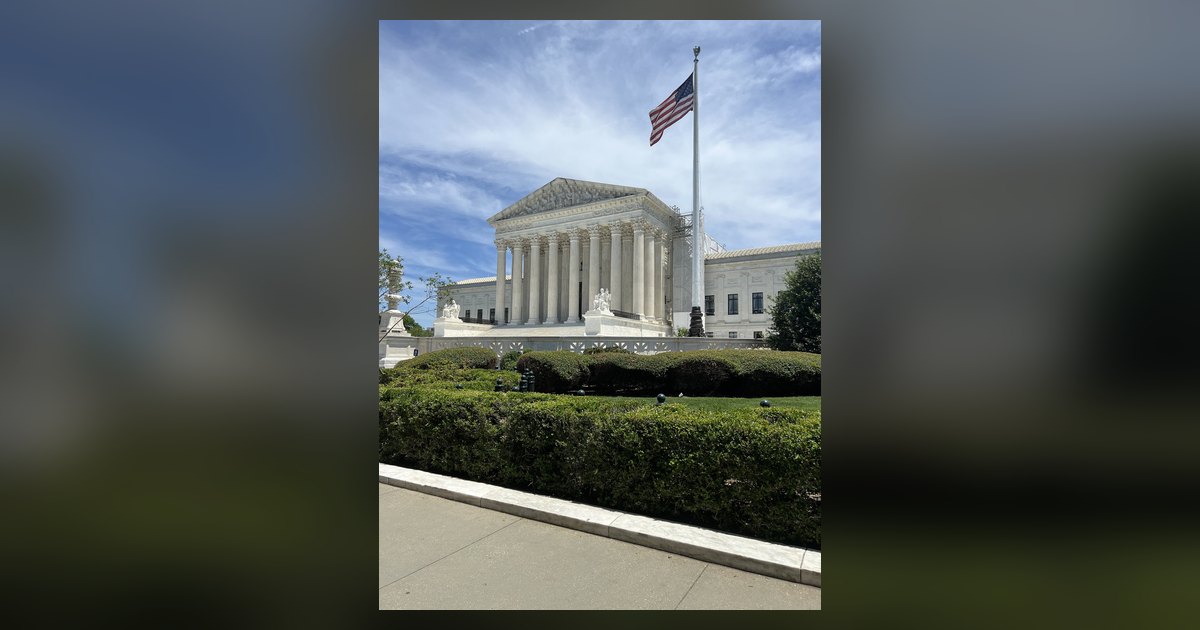
Photo: 颐园居 / CC BY-SA 4.0, via Wikimedia Commons (cropped)

Analysis
The Supreme Court on Oct. 21 refused to let the Trump administration begin tapering hormone treatments and certain surgeries for transgender federal inmates. The court gave no reasons, and the appeals court below found no trace of a specific security incident under the old policy.
Analysis: What It Means
The Supreme Court on Oct. 21 refused to let the Trump administration begin tapering hormone treatments and certain surgeries for transgender federal inmates. The justices left a lower judge’s block in place, according to The Hill. Justices Clarence Thomas and Samuel Alito dissented. Neither they nor the majority explained their reasoning.
The context
The policy comes from the Bureau of Prisons. Officials would taper treatment for inmates who now receive it. They would also stop social accommodations, such as hair-removal devices, The Hill reported.
The roots go back to the first day of Trump’s second term. He signed an order directing that no federal money be spent on medical procedures meant to conform an inmate’s appearance to the opposite sex, according to The Hill. The inmates’ case now centers on a February Bureau of Prisons statement that formalized the restrictions.
Solicitor General D. John Sauer told the court the changes are needed to maintain "institutional security." In court filings, the administration called the lawsuit an "egregious intrusion into federal prison administration."
The administration also argued the suit should fail for several reasons. One is that lower courts are not complying with a law that limits inmates’ ability to file endless civil litigation, The Hill reported.
The trouble for the government started at the D.C. Circuit. That court voted 2-1 that there was no trace of a specific security incident under the old policy, according to The Hill. The American Civil Liberties Union, which represents the inmates, says the restrictions would upend a status quo of three decades. In its filing to the Supreme Court, the group called the administration’s rationales "contrived."
The loss is unusual. The Hill reported the administration has won more than two dozen times when it asked the high court for emergency relief. Last year, the justices let it enforce its ban on openly transgender troops in the military.
The take
This section is analysis.
Start with what the order does not tell us. The court gave no reasoning, in the majority or in the dissents. Be wary of anyone who claims to know why the justices acted. The reports did not say how many justices joined the majority.
The Hill reported that the inmates have been suing for months. The court declined to lift the lower judge’s block.
Now the principle. Conservatives hold that the federal government should be limited, and that officials who answer to voters should decide how federal money is spent. The president’s order is a directive about federal funds. On that principle, it is the kind of decision that belongs to elected officials, not to a single judge.
But limited government also means a government that shows its work. The administration’s stated reason is security. The appeals court found no trace of a specific security incident under the old policy. That is the gap in the administration’s stated case. Saying "security" is not the same as proving a security problem.
A security rationale is easier to defend when it points to incidents. If the real argument is about how taxpayer dollars are spent, that argument can be made directly. The ACLU says the stated reasons were built to support the president’s order. That is the group’s accusation, and the reports offer no proof either way.
The ACLU’s other claim deserves the same caution. Its attorney, Li Nowlin-Sohl, said denying medically necessary care to people in prison violates their fundamental constitutional rights. That is an advocate’s position. The reports cite no court holding on that point. The Constitution as written, not as any advocacy group describes it, is the test.
The administration’s own argument about inmate litigation needs a closer look too. It says lower courts are not following a law that limits inmates’ ability to file endless civil suits. That is a serious charge against the courts. The reports did not name the law, say which courts, or describe how judges responded.
Finally, keep the loss in proportion. The administration has won more than two dozen emergency requests. One defeat does not erase that record. It does show that the court’s 6-3 conservative majority does not automatically side with the administration. Only two of its members publicly dissented here.
What to watch
- The lower-court case over the February Bureau of Prisons statement. The reports did not give a date for the next ruling.
- Whether the administration points to a specific security incident to back its stated rationale.
- Whether the administration pursues other options. The reports did not say.
- Whether any justice explains the Oct. 21 order. The reports showed no sign of one.
Sources
What it means for you
- The Bureau of Prisons policy cannot take effect while the lower court’s block stays in place.
- Because the inmates’ case centers on the February Bureau of Prisons statement, the next ruling would likely turn on that policy. The reports gave no date for it.
- If the administration wants to defend its security rationale, it faces a test: an appeals court found no trace of a specific security incident under the old policy.
- The administration has won more than two dozen emergency requests at the high court, so this loss stands out.