
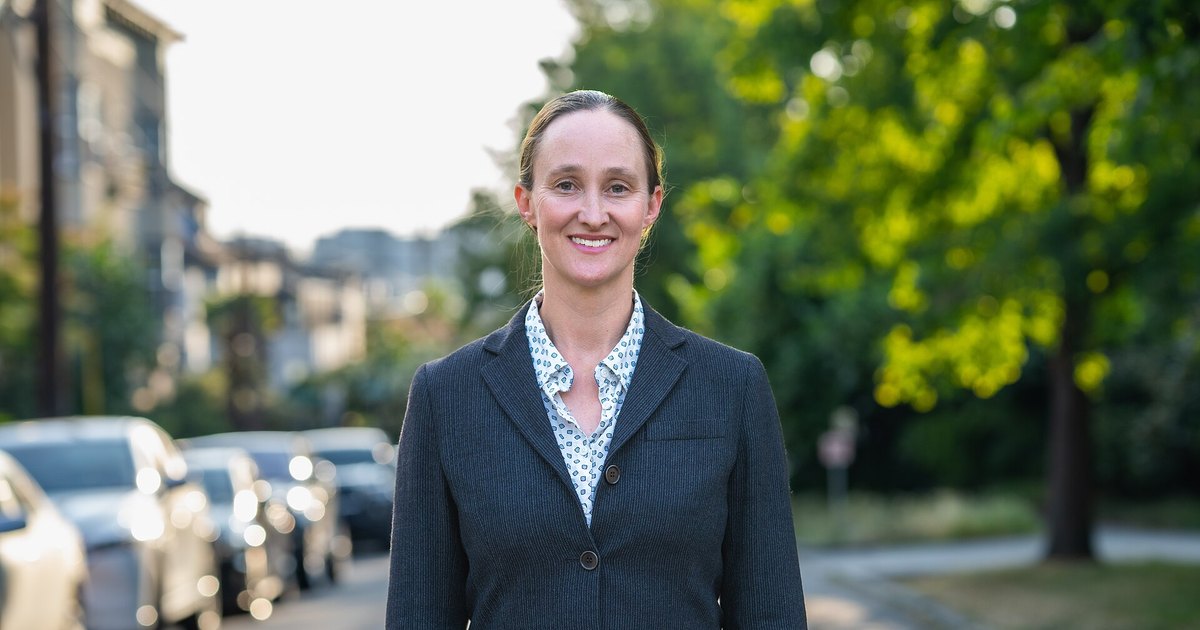
Photo: Wilson for Seattle Campaign / CC BY-SA 4.0, via Wikimedia Commons (cropped)

Analysis
Seattle Mayor Katie Wilson said on Oct. 21 that the city will take an outreach model that housed nearly 90% of people living outside in Pioneer Square and use it citywide. The plan depends on new shelter units, City Council support and numbers the mayor has not yet given.
Analysis: What It Means
Seattle Mayor Katie Wilson said on Oct. 21 that the city will use an outreach model citywide after it housed nearly 90% of people living outside in Pioneer Square. According to the Seattle Times, the plan depends on building new shelter units. Wilson declined to say where the model would go first or what the whole plan would cost.
The context
The model is not new. The Times reported that Purpose Dignity Action and REACH used it during the pandemic to move people from major downtown encampments into shelter and housing.

According to the Times, the state subsequently widened the strategy to a number of Washington’s biggest counties. Those initiatives focused on encampments located close to major highways and bridges. The paper reported that, under the state program, 95% of people living in encampments ended up moving into shelter.
Seattle has tried something like this before. The city-county homelessness agency began a similar effort downtown, hoping to take it citywide. According to the Times, it ended in 2023 after a slow start, and funding dried up by the time it was working.
The Pioneer Square initiative was a collaboration between the Downtown Seattle Association and nonprofit groups such as Purpose Dignity Action and REACH. During the weeks leading up to the World Cup matches in Seattle, outreach staff built relationships with everyone living in the neighborhood. According to The Times, almost half had experienced homelessness for over three years, and three out of four were struggling with addiction or mental illness.
The usual approach looks different, the Times reported. In most clearings, city workers offer whatever shelter is available, even when it is a poor fit. Few people accept, and even fewer actually go in.
Under former Mayor Bruce Harrell, the city set a record for clearings, according to the Times. Those efforts focused on moving people along. Many happened without offers of services because of a city law allowing immediate removal of “obstructions.” Wilson criticized sweeps that moved people “from block to block.”
The take
This section is analysis.
Start with what deserves credit. Wilson said the city will keep clearing encampments at its current pace. She also said public parks and sidewalks belong to the public. Taxpayers who pay for those spaces should expect them to stay open and usable.
Wilson is also shifting the measure of success. A clearing that moves a tent one block counts as activity, not progress. A system that gets a person indoors in a placement that fits is closer to a result. Wilson called homelessness “a policy failure.” If so, the officials who run the policy should be judged on outcomes.
The outcomes are where the open questions sit. The Times reported 70 of 80 people in Pioneer Square got into shelter or housing. It did not say how many are still housed. That number matters more than the day-one figure, and the public should ask for it.
Cost is the second question. The Times said the most sought-after shelter, with health care, runs about $45,000 to $90,000 per unit per year. Wilson has proposed $37 million for shelter next year. She has not given a total price for the plan. Council members should not vote on a plan whose full cost is unknown.
Scale is the third. Wilson cut her shelter goal to 960 units over her first two years, from an earlier goal of 1,000 a year. The Times noted that is still a big jump, since almost none were built in the four years before she took office. But it falls far short of the thousands estimated to be living outside. Wilson acknowledged the city lacks enough shelter.
Comparisons offer some hope and some caution. Wilson said programs in Denver, Kansas City and Houston informed her plan, and the Times said they have seen success. It also said none of those cities has Seattle’s cost of living or as large a homeless population. Seattle is a harder test.
Jon Scholes, who leads the Downtown Seattle Association, put the money argument plainly. He said “what’s also expensive is the status quo,” and listed emergency room trips, hospital costs, harm to small businesses, extra security and extra cleaning. That is a fair point. Spending is only justified, though, if it replaces those costs rather than adding to them.
Scholes further predicts “skepticism and cynicism” from the public, pointing out that the city made a homelessness emergency declaration a decade ago and that it accomplished little. Doubt is reasonable. Voters have been promised grand solutions to this problem before.
The case for the plan is that it puts business, nonprofits and city government on one list of names and one goal. The case against is that it rests on shelter that has not been built and money that has not been fully counted. The mayor now owns both.
What to watch
- Where the city first replicates the Pioneer Square model. Wilson did not say.
- Whether about 400 shelter units are operating by the end of this year, as Wilson said.
- Whether the City Council backs the $37 million for shelter in next year’s proposed budget. The reports did not give a vote date.
- Whether the city publishes a total cost and tracks how many people stay housed.
Sources
What it means for you
- About 400 new shelter units are due to be operating by the end of this year, out of 960 Wilson wants in her first two years.
- Wilson has not said where the model starts or what the full plan costs, so taxpayers do not yet have a total price.
- The reports did not say how many of the 70 people placed in Pioneer Square are still housed, which is the key test of the model.
- The City Council must back the shelter funding, and the reports did not give a vote date.