
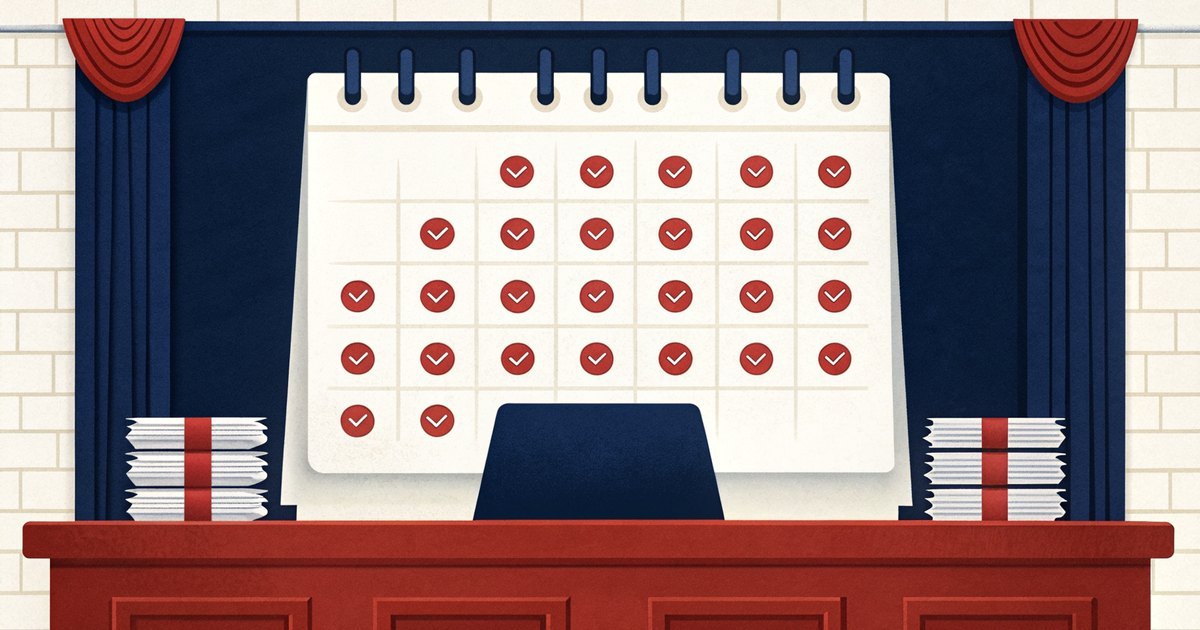
Illustration: Keystone Daily (AI-generated). Conceptual image; it does not depict real people or events. How we use AI.
Analysis
A Washington Examiner opinion column argues that America has a reelection problem more than a governing problem. The excerpt available gives the diagnosis but not the details of any proposal.
Analysis: What It Means
A Washington Examiner opinion column, published Sunday, November 1, 2026, argues that America has “less a governing problem than a reelection problem.” The column’s web address refers to single term limits for the president and Congress. The author says the permanent campaign leaves officeholders too little time to do the job voters sent them to do.
The context
The argument rests on a diagnosis, not a villain. The column does not blame the character of those in office. It says, “Good character can’t fix a calendar that leaves too little time to govern.”
The author puts rough numbers on the problem. According to the column, presidents spend half of their first term running for a second. Senators serve six-year terms but lose roughly two of those years to campaigning. House members serve two-year terms and, in the author’s words, “never stop.”
The column says the result is a government built around winning elections instead of solving problems. These are the author’s own estimates. The excerpt cites no study or data behind them.
The costs, as the column sees them
The author says the price of this calendar is visible to everyone. The examples named are aging infrastructure, Social Security fixes pushed off for another cycle, and immigration compromises that never get far enough to pass.
The column presents these as products of the election calendar. It does not walk through any one of them in detail. It does not say which specific bills or votes stalled.
The timing
The column ties its point to the midterm elections it calls “Tuesday’s.” It says that vote will settle control of Congress for two years. It also says the vote will quietly start the next campaign.
According to the column, by Wednesday morning, people considering a presidential run will be arranging travel to states that hold early primaries. It also says that recently elected House members will be back to their fundraising schedules, collecting money for 2028.
What the column does not say
The excerpt does not lay out how a ban on reelection would work. It does not say which offices would be covered or how long a single term would last. The web address points to the president and Congress, but the text provided does not spell out a plan.
The excerpt also reports no bill, no sponsor and no timetable. It is an argument, not a legislative proposal.
The take
This section is analysis.
The column raises a fair question for anyone who wants a smaller, more disciplined government. Do officials who always face the next election put their energy into the work, or into the next race?
The author’s list of delays is one many voters already know. If the problems are real and the calendar is part of the cause, a taxpayer has reason to ask what the current system delivers for its cost.
There is also a counterweight a conservative reader would want to consider. Elections are how voters hold officials to account. The column’s own figures show House members face voters every two years and senators every six. A ban on reelection would change who answers to voters and how often.
The proposal is still only a diagnosis in the text provided. Details such as term length, which offices are covered and how voters could remove a failing official would matter a great deal. The column supplies none of them in the excerpt.
The column’s strongest point may be the simplest one. If lawmakers spend much of every term running, less of each term is left for governing. Whether a ban on reelection is the right fix is a separate question, and the excerpt does not settle it.
What to watch
- The Tuesday midterm elections the column refers to, which it says will settle control of Congress for two years.
- Wednesday morning, when the column expects presidential hopefuls to start booking early-primary trips.
- Fundraising for 2028, which the column says newly elected House members will resume.
- Whether anyone in Congress picks up the single-term idea. The excerpt reports no bill or sponsor.
What it means for you
- If the column is right that campaigning takes up much of each term, voters could see slower action on issues like infrastructure, Social Security and immigration.
- If early 2028 activity begins right after the midterm vote, as the column says, the next presidential campaign could be underway almost immediately.
- A reelection ban would change how often officials answer to voters. Without term lengths or covered offices spelled out, it is hard to judge the trade-off.